
22/10/26
A day in the life of Elaine McGrath
22/10/26
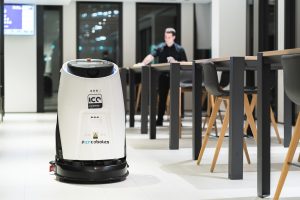
As smart cleaning technologies continue to develop, Stuart Conroy, Commercial Director at Peartree Cleaning Services, talks about where technology can add genuine value and why the human element of cleaning should not be overlooked.
Q. Smart cleaning technologies are often presented as the future of the industry. Do you think there is a danger that they are being viewed as one-size-fits-all solution?
A. Yes, I think that is a fairly typical issue with new innovation, particularly within our industry. We still have the first robot we bought about eight years ago, and frankly, it was useless then and it is useless now. It was enormous, couldn’t be programmed properly and would just stop. But at the time, you felt you had to have a robot because otherwise you looked behind the times. That is the danger with some smart technology. It may be fixing a problem that doesn’t actually exist. I recently attended a supplier event where one company had invested £1 million in a platform, but nobody at the FM company was using it. When the company asked why they weren’t using it, they said, ‘did you ask us if there were any specific problems that you could help with before investing your money?’ There is a tendency to invest in technology because it sounds impressive, but none of it necessarily tells you whether something is actually clean.
Q. Where can smart cleaning genuinely add value, and is it always worth the investment?
A. I think airports, shopping centres and other large, fluid environments where it could really come into its own. I remember working for a company that cleaned Gatwick Airport, where the cleaning requirements could vary depending on where a plane had arrived from. In environments where the flow of people and cleaning requirements can change significantly, technology could help identify those patterns and direct resources accordingly. The office environment is different. Monday to Thursday, you can predict fairly well what is going to happen. Friday is different because fewer people are in. You don’t necessarily need sophisticated technology to tell you that. There is also the question of cost. There are products where the cost of installing the technology into a small office can be around £6,000 a year. If the cleaning wages might be around £150 a week, you have to ask what value that technology is providing. There is also the issue of licensing. You can end up paying for an upfront cost and an ongoing fee without having much control over what happens to the technology in the future. So I think you have to look at the environment and the problem you are trying to solve. When we were working in a large shopping centre, for example, we needed to record when a spill had been mopped up and the floor dried because of potential insurance claims. Knowing where the incident happened, how quickly it was resolved and having photographic evidence made sense because there was a genuine problem to solve.
Q. Could technology ever replace the experience and judgement of a cleaning operative?
A. I think eventually some of it probably will, although perhaps not in my career. We already have robots that vacuum floors and they are very good at what they do. But they still follow the same pattern. If there is nothing to clean, they continue doing the same thing. A cleaner walking up to a desk has a completely different level of judgement. If the chair is exactly where it was the night before and nothing on the desk has been touched, they might decide it doesn’t need cleaning. That decision-making element is difficult to replicate. You can hear about technology that can identify a dirty cup, but can it see dust or fingerprints? Perhaps eventually, but I think that is still a long way off.
Q. Are organisations buying smart cleaning technology because it is perceived as innovative, rather than because it addresses a genuine operational need?
A. I definitely think the cleaning industry suffers from ‘FOMO’ – the fear of missing out. It is such a competitive market that nobody wants to feel their competitor is massively ahead. If someone tells you another company has put smart technology into every building, you immediately think you need something similar. I think companies can buy technology because they believe it is what they should be doing, rather than because it solves an actual problem. There is a real fear that somebody else has an edge that you don’t have. You can go into a presentation and suddenly be asked about smart technology because somebody has told the client about it. You then feel you have to demonstrate that you are doing something similar. So, particularly in this early stage of smart cleaning, I think some companies will buy things because they believe they need to, rather than because they have identified a genuine operational problem.
Q. Is too much data becoming another problem, and what should facilities managers be asking before investing?
A. Absolutely. We might present a client with 20 different streams of data and, in reality, they will usually pick one or two that they actually want to see. There is definitely a danger of data overload. Technology companies are beginning to recognise that and are giving users more control over what they see. But I think the fundamental question should always be: what is the value? What problem are you trying to fix? What information do you currently not have that you genuinely need? Once you understand that, find the product that solves that particular problem. Don’t start with the technology and then try to find a reason for having it. For us, the fundamental question remains: how clean is the office? That is what our reputation is built on, and I haven’t yet seen anything that can replace the value of good cleaning. If you are running an airport or shopping centre, perhaps you genuinely need to know how many times a washroom has been cleaned or how quickly a spill was dealt with. That’s useful information because it addresses a specific requirement. But you don’t necessarily need a dashboard telling you that someone cleaned 10 desks in three minutes simply because the technology can tell you that.
Q. Does the future of cleaning lie in a more balanced approach, combining technology and data with traditional cleaning expertise and the human element?
A. One hundred percent. There aren’t enough people who want to work in cleaning, so we are all competing to recruit people and, more importantly, retain them. When technology is helping the cleaners, rather than simply helping the owners or facilities managers, that is when I think we will see real value. Imagine a cleaner being told: ‘you don’t need to clean all 1,000 desks tonight because only 800 have been used. You’ve got your tasks on your phone and, ‘if you finish efficiently, you can go home early.’ That would be genuinely useful technology because it is helping the person doing the job. It could make their working life better and potentially allow them to earn more by working more efficiently. At the moment, so much of the technology is focused on how efficiently someone has worked, when they did something and whether there is a dirty cup somewhere. That’s where smart cleaning will ultimately add real value – when the technology works with people, rather than simply measuring them.

