
12/10/26
Peartree wins International Green Apple Award
12/10/26
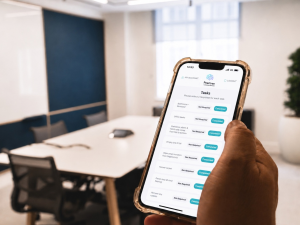
Stuart Conroy, Commercial Director at Peartree Cleaning, explains why facilities managers should expect cleaning data to support better decisions, not simply provide a digital record of completed tasks.
Facilities managers have access to more building data than ever before and cleaning contracts are no exception, with digital audits, QR codes, task records and performance dashboards all able to provide a detailed picture of activity across a building or an estate.
However, collecting more information does not automatically create a better service. A dashboard may prove a task was recorded at a particular time, but unless that information helps someone protect standards, solve a problem or use resources more effectively, its practical value is limited.
The question facilities managers should ask is not simply, ‘What data can my cleaning provider give me?’ but, more importantly, ‘What will we be able to do differently because we have it?’
We began developing Peartree 360 with technology partner Pingala in 2016, initially bringing together planned works and periodic activity, audits, compliance documents and a live helpdesk. It has continued to evolve, with enhanced reporting, geotagged time and attendance, ESG data, task verification and portfolio reporting added as client needs have changed.
We have invested more than £300,000 specifically in developing the app, reflecting the strategic importance placed on accessible and reliable contract data. The platform is bespoke to Peartree’s contracts rather than an off-the-shelf dashboard, and its purpose is to provide a shared, current view of service delivery, allowing client and operational teams to see what is happening and decide what needs to happen next.
Clients can receive real-time notifications of site visits, audits and planned activity without having to wait for the next monthly report, while those managing several sites can move easily between locations and compare performance across their portfolio.
Unlike a licensed off-the-shelf system, Peartree 360 can be adapted as requirements change and has been modified on numerous occasions in response to client requests, from straightforward layout changes to entirely new modules, ensuring its development remains focused on solving genuine operational problems.
Many cleaning specifications are agreed using assumptions about occupancy and required frequencies, but hybrid working can mean those assumptions no longer hold true throughout the week, as a building might be busy from Tuesday to Thursday but much quieter on a Friday when more employees work from home.
This is where occupancy-driven cleaning becomes particularly relevant, as footfall and building-use data can help providers move away from rigid input-based specifications built around fixed hours and frequencies, allowing the service to respond more closely to how each building is actually being used and where cleaning resources are genuinely required.
Within Peartree 360, agreed areas are assigned unique QR codes which operatives scan at the point of service before working through a digital checklist. The resulting record shows the operative, location and time as well as whether each activity was completed or was not required.
Each room can also be assigned a value based on a combination of its size, anticipated cleaning time, usage, required frequency and risk profile, helping managers understand the demands across a building and plan the right number of people and cleaning hours for different areas.
One isolated record should not determine a change to the service but if tasks in a low-use area are regularly marked as not required on a particular day, that’s a pattern worth discussing with the client.
Where we have deployed housekeeping QR codes, the resulting data has identified housekeeping efficiencies of up to 20%. This has allowed labour to be redeployed into higher-priority tasks rather than simply removed and improving the use of available resources while protecting the agreed standard.
The aim is not to clean less, but to direct resources to where they will make the greatest difference and keep the specification aligned with how the building is actually being used.
Task completion only shows that somebody attended, while quality assurance is needed to demonstrate the standard achieved.
Our Account Managers complete digital quality audits through the same platform, including scores, photographs, observations and corrective actions tracked through to completion, while historical results show whether performance is stable, improving or requires further intervention.
Useful data should not simply report a disappointing score at the end of the month, but should prompt a response while the information is still current, whether through training, additional supervision or a change to the schedule.
KPI scorecards can also track measures such as response times and customer satisfaction, helping us and our clients identify where performance is improving and where further action is required.
The same logic applies to reactive requests and consumables, as a rise in helpdesk requests may point to insufficient planned coverage in an area, while unexpected product use may flag changing occupancy or a stock-control issue.
Technology must work for cleaning teams too, with clear digital checkpoints giving colleagues a consistent list of what is expected in each room and helping to reduce the risk of tasks being overlooked. Toolbox talks can also be delivered through the app, with Peartree able to see which colleagues have completed them and what remains outstanding, providing a clearer record of important operational and compliance communication.
The technology should create clarity rather than unnecessary pressure, as task verification is not a substitute for good management and shouldn’t be used without context. There may be a legitimate reason why an activity could not be completed or was not required, which is why the data should be the starting point for understanding what happened, rather than the whole answer.
No platform can understand a workplace in the way an experienced manager can, so Peartree 360 is intended to support visible management rather than replace it. Our managers interpret patterns, investigate exceptions and agree practical improvements with clients, with any proposed change to frequencies or resources reviewed against the required standard before it’s introduced.
Innovation is only valuable if it improves the service, which means technology should give clients better visibility, help operational teams make better decisions and allow cleaning resources to be used where they deliver the greatest value.
Useful cleaning data should be timely enough to support a response, detailed enough to provide assurance and clear enough to guide a decision but, most importantly, it should lead to action.
A dashboard is only the means of presenting information: its value is demonstrated on the ground through more consistent standards, better-targeted resources, faster problem-solving and a service that adapts as the workplace changes.

